BIOGRAPHICAL
INFORMATION ABOUT THE PAINTER, JUAN MIRASIERRAS
Juan
Mirasierras
Cicujano
was
born
in
Madrid
on
the
10th
January
1921.
The
son
of
a
renowned
silversmith,
since
early
childhood
he
felt
a
vocation
towards
painting.

Between
1927
and
1931
he
lived
in
Cordoba,
where
Julio
Romero
Torres
gave
him
his
first
box
of
paints
as
a
gift.
In
Cordoba,
in
the
Museum
of
Fine
Arts,
there
exists
a
painter's
palette
carved
in
silver,
with
the
portrait
of
the
Cordovan
artist
and
various
allegories
dedicated
to
his
personality,
that
in
his
memory
and
homage
was
created
by
Juan's
father,
D
.
Julio
Mirasierras.
On
returning
to
Madrid
Juan
soon
abandoned
the
School
de
los
Padres
Salesianos
to
begin
an
apprenticeship
with
D.
Luis
Gordillo,
painter
of
the
Herraiz
group
and
exceptional
expert
in
the
old
styles
and
techniques
,
who
taught
him
about
the
profession
and
gave
him
his
first
notions
about
art.
He
begins
to
collaborate
on
the
paintings
that
his
master
carries
out
and
also
he
paints
some
of
his
own.
Between
1933
and
1936
he
attends
as
a
student
at
the
'Escuela
Central
de
Artes
y
Oficios'
where
he
is
taught
by
D.
José
Lapayese,
D.
Enrique
Martínez
Cubells
and
D.
Marceliano
Santamaría.
In
1934
he
submits
some
drawings
to
a
national
children's
competition
that
is
celebrated
in
the
'Ateneo
de
Madrid'
organised
by
"Agrupación
Artística
Castro
Gil".
He
is
given
a
prize
and
is
chosen
to
exhibit
in
international
exhibitions
that
would
follow
in
New
York
and
Moscow. |
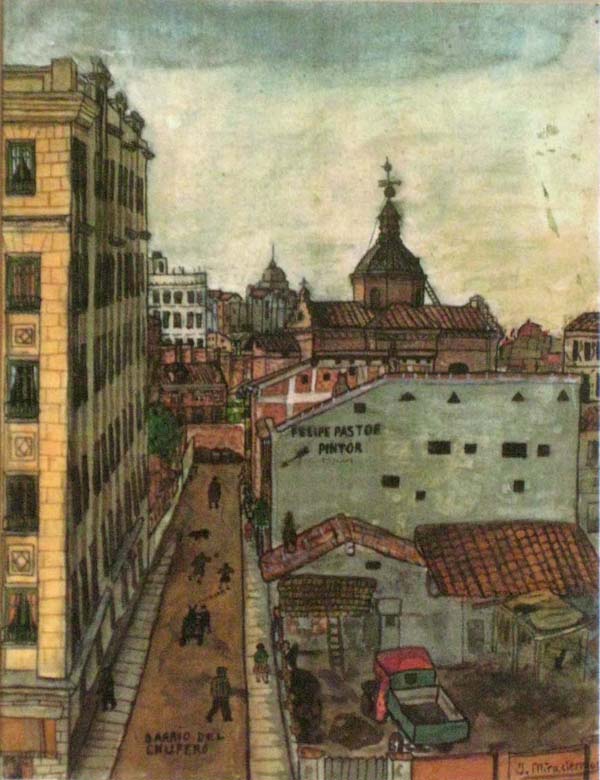 |
guache
27 x 35 cm |
In
1935
he
receives
his
first
paid
commission:
a
pair
of
still
life's
ordered
by
a
merchant.
In
1936
he
continues
in
the
workshop
of
D.
Luis
Gordillo
but
it
is
impossible
to
avoid
the
atmosphere
of
this
time
in
history.
His
much
loved
eldest
brother
,
Julio,
joins
a
military
unit
and
Juan
without
a
moment's
hesitation
goes
with
him.
He
wants
to
accompany
him
and
experience
that
'uncivil'
war
whilst
drawing
...
always
drawing.
He
was
busy
drawing
when
the
general
found
him
(of
course,
he
was
still
a
minor).
The
general
was
amazed
and
he
said
to
him,
"I'll
hit
you
so
hard
that
I'll
send
you
flying
back
to
your
mother".
A
few
days
later
the
general
called
for
him.
Juan
thought
he
was
going
to
receive
a
blow
,
but
instead
the
general
gave
him
paints
and
a
sketching
pad
on
the
condition
that
he
was
to
paint
away
from
areas
of
danger.
When
the
battalion
returned
to
Madrid
the
general
threatened
Juan
again
,
"
I
don't
want
to
see
you
again!".
The
battalion
soon
returned
to
the
front.
Juan
accompanied
his
brother
as
far
as
the
barracks.
They
hugged
each
other
and
said
goodbye.
Juan
never
saw
him
again.
His
brother
died
during
combat.
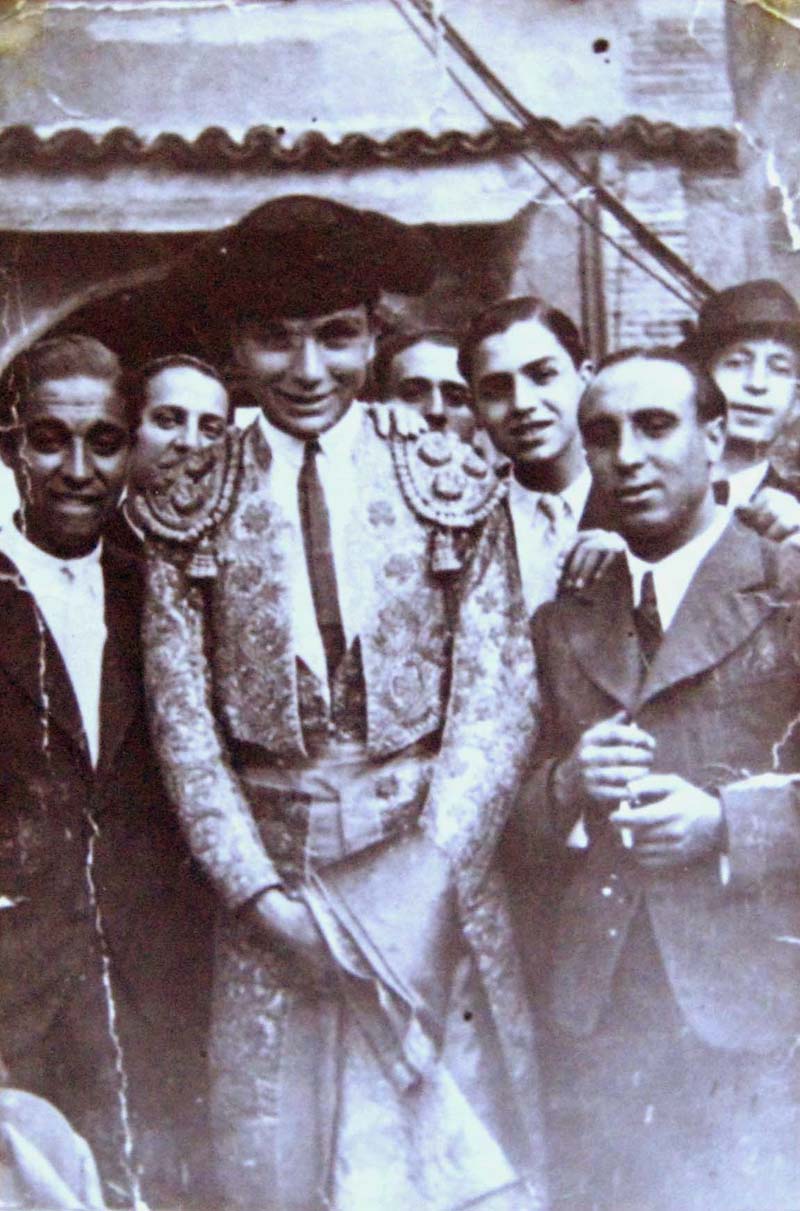
In 1939, after the war finished, Juan's father begins to reorganise the
silversmiths and Juan collaborates with him for some time whilst still painting
to which he has by now decided to dedicate himself completely. Time passes and
without doubt D. Julio , somewhat tired by the fact that although his son
cooperates he does not fully integrate himself into the silversmith business,
decides one day to force the situation. Juan is forced to choose between his
father's business or his art. Juan chooses to paint , giving start to a
difficult and uncomfortable period which is finally rewarded some time later by
a visit from the merchant that had given him his first commission in 1935. This
time the merchant suggested that Juan should paint miniatures on ivory. He needs
the money so he accepts, despite the fact that this kind of painting had never
entered into his plans. He begins a long lasting new stage as a miniaturist. He
'invents' his technique through a laborious process of trial and error; he
cannot find masters or information to give him orientation. The museums and
places that have collections are all closed. Finally he learns to dominate this style and he achieves great recognition.
However, at the moment of climax , in a bid to save his sense of freedom as a
painter and to escape from inevitable classification and pigeonholing , he
abandons this path. The painting of miniatures occurred by chance although in
doing so he dedicated great effort and love to this. He carried out numerous
portraits , original compositions and some reproductions of classic works of
art.
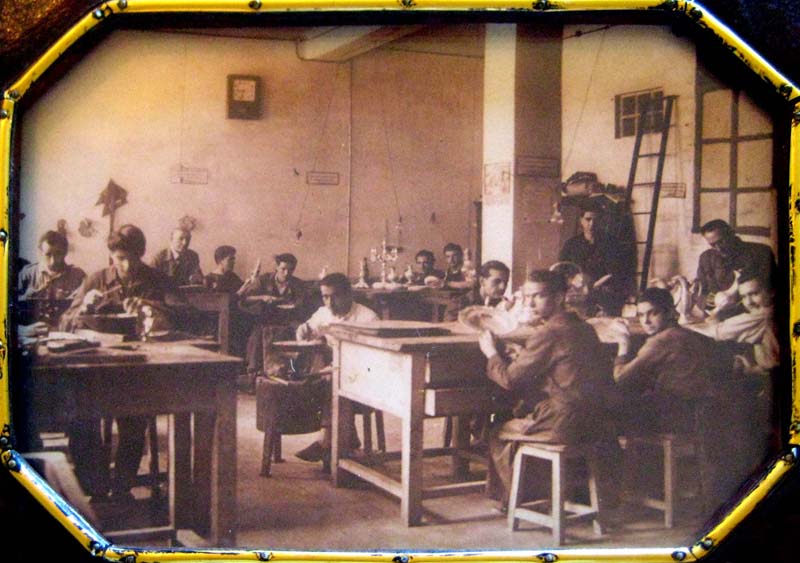
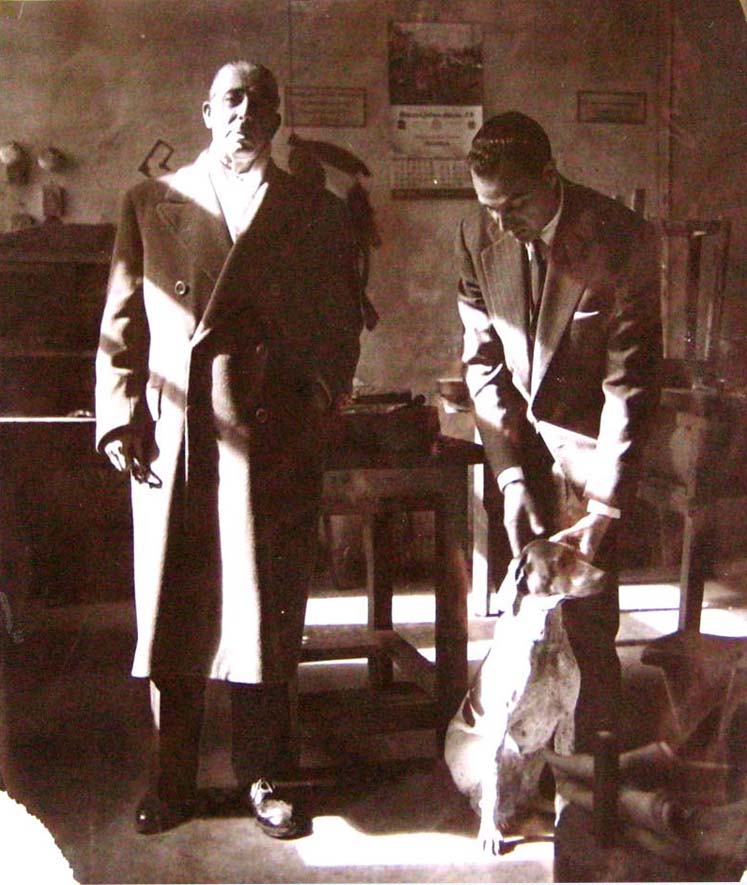
In the 'Exposición Nacional de Bellas Artes' of 1945 various miniatures of his
were showcased. In 1948 he held an exhibition in Madrid (Sala Kebos) that was a
great success confirming his status as one of the finest miniaturists in Spain.
It was at this point that he decided to abandon his dedication to miniatures. In
1949 the Ministry of Foreign Affairs solicited his work for exhibitions in Paris
and Munich. His name is registered as "one of the great Spanish miniaturists" in
the anthology 'La Miniatura - Retrato En España' written and put together by the
art critic D. Mariano Tomás and edited in 1953 by the Ministry of Foreign
Affairs.
In 1949 he holds his first exhibition of oil paintings in Madrid , (Sala Dardo).
He participates as part of a collective in the Sala Vilches and has work sent
onto Salón de Otoño in Madrid with the notable backing of the critic Camón Aznar.
His work is referred to as 'excellent'.
1951 - Juan exhibits again in Sala Dardo.
1952 - He exhibits in the new Galería Los Sotanos in Madrid. He participates in
the National Competition of Fine Arts. He travels in order to study through
France and part of Switzerland.
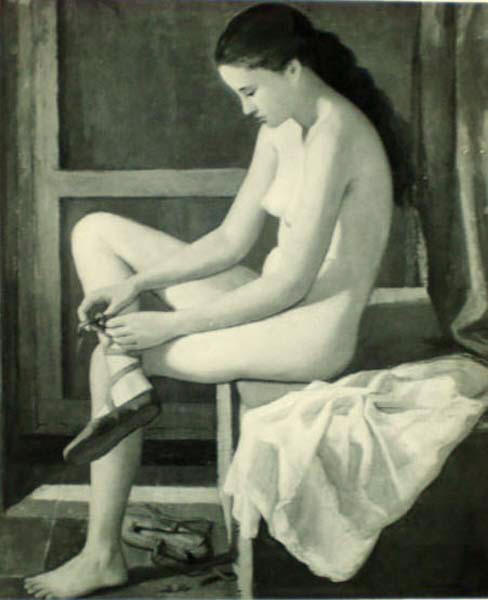
1953 - His first prize:
"Concurso
Nacional de
Bellas Artes' held in Linares.
100 x 85 cm
|
 |
1953 - He is approached by the Galería Vilches. His paintings are exhibited in
itinerant exhibitions throughout Latin America.
1954 - Exhibition in Palma de Mallorca, in Galerías Costa and in the 'Circulo de
Bellas Artes'. Juan receives first prize in the 'Concurso Nacional de Bellas
Artes de Linares'.
1955
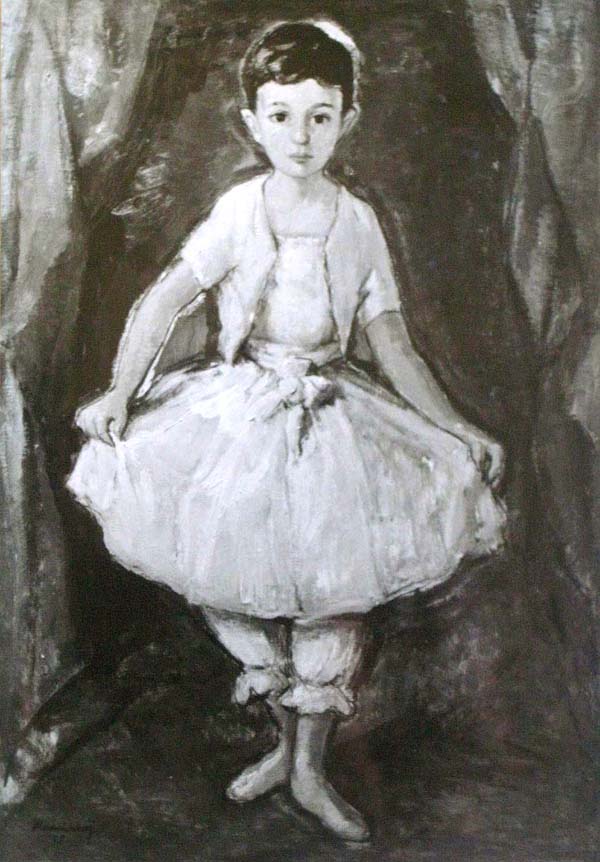
- His first prize:
"Gran
Premio
Diputación de
Barcelona"
100 x 85 cm
|
 |
1955
-
Juan
wins
the
silver
medal
in
the
IV
Concurso
Nacional
de
Pintura
held
in
Alicante.
He
participates
in
the
III
Bienal
Hispanoamericano
de
Arte.
1956
-
Silver
medal
in
the
V
Concurso
Nacional
de
Pintura
,
of
Alicante.
Presented
with
a
prize
at
the
National
Competition
,
'Gran
Premio
Diputación
de
Barcelona'.
He
participates
in
V
Salón
de
Otoño
in
Seville.
1957
-
The
'Nacional
de
Bellas
Artes'
of
this
year
,
even
though
he
won
,
was
his
last
public
exhibition.
Sure
enough,
from
this
date
onwards
the
artist
traveled
,
studied
and,
above
all
,
painted
without
pause.
He
paints
numerous
portraits
during
this
time.
He
sells
practically
everything
that
he
paints.
The
moment
comes
when
foreign
interest
is
shown
and
most
of
his
work
goes
abroad,
above
all
to
the
United
States
,
where
an
art
dealer
asks
him
for
more
and
more
paintings.
In
the
meantime
,
in
search
of
new
outlets
to
his
artistic
restlessness
,
he
installs
a
kiln
and
begins
to
study
the
complicated
techniques
of
enamelwork.
Throughout
several
years
,
without
stopping
oil
painting
,
he
dedicates
himself
to
trying
to
dominate
this
form
of
expression,
eventually
dominating
it
completely.
"The
fact
that
his
works
of
art
ended
up
in
the
most
prestigious
national
and
foreign
collections
is
enough
to
demonstrate
the
level
of
excellence
that
he
had
achieved."
(taken
from
an
article
by
J.M.
Janssens).
There
are
works
of
his
art
in
the
'Diputación
de
Barcelona'
,
Museum
of
Fine
Arts
of
Linares;
Palacio
del
Prado
(Madrid);
Royal
Palace
of
Laeken,
Brussels
(Belgium)
;
collections
and
private
property
in
Spain
,
France
,
Switzerland
,
England
,
USA
,
Canada
,
Argentina
,
Mexico
,
Venezuela
,
Chile
,
Puerto
Rico
,
Cuba
,
Colombia
,
and
others.
The
Hotel
Carlton
in
Madrid
and
the
Hotel
Gran
Delfin
in
Benidorm
have
a
large
collection
of
his
sketches
and
paintings.
The
portraits
he
has
painted
include
:
D. Francisco Franco Bahamonde y su
esposa Dª Carmen Polo de Franco; Marqueses de Villaverde y sus hijos; Marqueses
de Garcillan y Condes de Monroy y sus hijos; madre del conde de Montarco;
Marquesa de Zurgena; Condesa de Isla; hijas de los Condes de Benahavis –Marta
y Cristina-; familia de Ambrúster; Sra. e hijos de D. Gregorio de Velasco; Sra.
e hijos de D. Mariano Jiménez Díaz; D. José M. Aycuens, Sra. e hijos; D. Luis
Araujo Costa; Dª Elena Arvanitidi de Ransay; D. Carlos Marqueríe; Sra. e hijos
de D. Pablo Eguinoa; Sra. e hijas del Dr. Antoli Candela; Sra. del Dr. Cano;
Sra. de D. Joaquín Bau; Sra. del Dr. Muñoz Calero; Sra. de D. Eugenio Lostau;
Sra. de Villamil; Sra. e hijos de Lorenzo; Mariemma; Sra. de D. Fernando Larrea;
Sra. de Fernández Rivera; Sra. Vda. de Barbarosa; Sres de Pelayo; Sres. de
Maldonado; Sra. Vda. de Usera; Dr. Muñoz del Rio; Sra. e hijos de Martín Sanz;
Sres. de Muñoz; Sra. de Novales; Sra. de Jiménez; Sra. e hijas de Gayá; Sra.
Dña. Daniela González, Vda. de Pastor; D. M. Longares, Sra. e hijos; Sra. de
Galicia; Sir Oliver; Sir Eric Readel; Sra. de Giralt; D. J. Luis Ballve; Sra.
Vda. de Ribas; Sra. e hijo del Dr. Cross; Dr. Iranzo; D. Antonio Iglesias; Dr.
D. Francisco García Gallego; Excmo. Dr. D. Francisco Gordillo; Sra. Dña. Julia
Olmos; Dña. Rosario Salazar de Cueto, Sra. de Molina, D. Luis; Sra. Dña. Julia
Mirasierras de Cabezas; Sr. D. Pedro Cabezas; Srtas: Marta y Sandra Cabezas
Mirasierras; Srtas. Marina Brú; Cristina Chavarri; Maravillas Domecq; Luisa
Cano; Mª del Carmen Maseda; Lilian da Costa; Lourdes Mendaro; Matilde Figueroa;
Helena y Sara Alvarez Miranda, etc... Y numerosos retratos infantiles.
_____________________________________________________________________________________________________
INDIVIDUAL AND COLLECTIVE
EXHIBITIONS OF JUAN MIRASIERRAS
1934. Concurso Nacional
Infantil, (Ateneo de Madrid)
1937. Concurso del Ejercito del
Centro, (Madrid)
1945. Nacional de Bellas Artes,
(Madrid)
1948. Sala Kebos, (Madrid).
Pinacoteca, (Barcelona)
1949. Institutos de España en Paris y
Munich, invitado por la Dirección General de Relaciones Culturales. Sala Dardo,
(Madrid). Galería Vilches, (Madrid) Salón de Otoño, (Madrid)
1950. Nacional de Bellas Artes.
Invitado por Galerías Vilches, en Venezuela, Argentina Uruguay Chile, Puerto
Rico.
1951. Sala Dardo, (Madrid). Galería
Biosca, (Madrid) "Concurso de Bodegones".
1952. Galería Los Sótanos, (Madrid)
1953. Salón de Otoño, (Palma de
Mallorca)
1954. Galería Costa, (Palma de
Mallorca. Círculo de Bellas Artes, (Palma de Mallorca). Concurso Nacional de
Linares. Bienal de Arte Hispanoamericano.
1955. Concurso Nacional, de Alicante.
Nacional de Bellas Artes. Concurso Nacional de Pintura
1956. Gran Premio Diputación de
Barcelona. Concurso Nacional de Alicante. Salón de Otoño, de Sevilla.
1957. Nacional de Bellas Artes, de
Madrid.
1960. En Jeanmarie Gallery, (New
York), obra en permanencia desde este año.
1973. Galería de Arte de la C.A.A.,
(Oviedo)
1974. Galería de Arte de la C.A.P.,
(Benidorm). Aula Adsuára, (Castellón)
1976. Galería de Arte de la C.A.A.,
(Oviedo, Gijón y Avilés)
1977. Galería d’Art Decostyle,
(Gante-Bélgica)
1978. Sala Rembrant, (Madrid)
1979. Instituto de España en Londres.
1980. Canning House de Londres.
1981. Casa de España, (Tokyo-Japón)
_______________________________________________________________________________________________________
SOME OPINIONS
ABOUT HIS ART
In June 1949 "Sala Dardo
Luis Gil Fillol (Art
Critic and Member of the Association of the Museum of Contemporary Art of
Madrid) published in "Luna y Sol"
Madrid:
"... Juan Mirasierras , exceptional miniaturist, of fine drawing and elegant
brush-stroke, possessor of a technique that consists not only of patience and
accuracy, but also of wisdom and sensitivity, he proved at the last moment to be
a skilled painter ...
I dare to say that in Juan Mirasierras there is a painter of authentic
genius.Compositions such as "Maternity" and "A Child Playing" and portraits such
as those of D. Luis Araujo Costa and Dña Maria Luisa Rivas demonstrate good art,
good taste, and good craft, three things that are necessary to reach great
heights.
Mirasierras frankly paints in a modern style , in that contemporary style
that might have seemed exotic to begin with , despite it being very Spanish,
born of the Spanish artist Goya ... but Mirasierras is not "one more" or "one of
many"; he has an individual technique that is very different to that of
Mirasierras the miniaturist, even though this did not reflect the style of other
miniaturists either, he can be very proud to have his own place in Spanish
modern art ... "
...Within
the
estetic
sensitivity
amongst
the
painters
we
have
mentioned
(Francisco
Arias,
Juan
Antonio
Morales,
Isaac
Diez
Pardo,
Eduardo
Vicente,
Amparo
Palacios,
Pedro
de
Valencia,
Francisco
Lozano...)
Mirasierras
is
more
correct
in
his
painting
and
more
of
a
realist
than
all
these
mentioned.
Mirasierras
is
not
an
impressionist;
his
painting
loose
and
graceful,
yet
sustaining
and
maintaining
the
expression of
emotion
to
be
found
in
impressionism.
His
perfection
in
his
still
life
painting
as
in
his
portraits,
have
admirable
classical
undertones.
His
maternity
paintings,
with
their
strength
of
the
details
of
the
figures,
leave
a
print
of
deep
feeling
and
something
of
the
sublime.
Of
the
sublime
Saint
Marc
has
said
that
it
is
defined
in
the
brief
expression
of
that
which
is
most
magnificent
in
the
soul.
One
can
apply
this
aphorism
to
Mirasierras...
We
can
present
him
as
a
new
value
of
present
Spanish
painting
that
betokens
a
new
pictorial
emotion
both
agreeable
and
engaging,
through
its
extraordinary
colouring...
____________________________________________________________________________________________________________
________________________________________________________________________________________________
...Within the estetic sensitivity amongst the painters we
have mentioned (Francisco Arias, Juan Antonio Morales, Isaac Diez Pardo, Eduardo
Vicente, Amparo Palacios, Pedro de Valeneia, Francisco Lozano...) Mirasierras is
more correct in his painting and more of a realist than all these mentioned.
Mirasierras is not an impressionist; his painting loose
and graceful, yet sustaining and maintaining the expression of emotion to be
found in impressionism. His perfection in his still life painting as in his
portraits, have admirable classical undertones. His maternity paintings, with
their strength of the details of the figures, leave a print of deep feeling and
something of the sublime. Of the sublime Saint Marc has said that it is defined
in the brief expression of that which is most magnificent in the soul. One can
apply this aphorism to Mirasierras...
We can present him as a new
value of present Spanish painting that betokens a new pictorial emotion both
agreeable and engaging, through its extraordinary colouring...
-In
September
1949
“Sala
Dardo”
In
the
magazine “City
of
Youths”
-
Madrid
“...
The
young
painter,
Juan
Mirasierras,
despite
his
youth,
already
reaches
maturity
in
his
art...
his
oil
paintings
are
notable
for
the
classic
perfection
of
their
symmetry,
the
discrete
entonation
of
colours
and
the
simplicity
of
their
figures.
In
his
portraits
we
see
a
naturalness
and an
elegance
despite
the
artistic
appearance
that
can
be
noted
in
them.
His
still
life
painting
is
worthy
of
emphasis,
for
the
fresh
and
bright
colours
that
he
uses...
and
his
miniatures
are
beautiful,
in
the
extreme
detail
of
the
figures
and
the
materials
which
acquire
an
exquisite
transparency...”
November
1951
“Sala
Dardo”
Luis
Gil
Fillol,
(Art
Critic
and
Patronage
Member
of
the
Madrid
Museum
of
Contemporary
Art),
the
illustrious
critic
wrote:
“
Mirasierras:
he
name
seems
symbolic,
bright
and
cheerful.
Amongst
all
the
waffle
following
so
many
private
exhibitions,
the
racket
of
the
Latin
American
Biennial
Exhibition,
the
proximity
of
the
prestigious
annual
National
Competition
of
Fine
Arts
and
the
eternal
dispute,
which
is
now
made
more
acute,
between
figurative
art
and
that
of
the
imagination,
realist
painting
and
the
abstract,
tradition
and
revolution,
it
is
not
in
the
least
bit
easy
to
attract
attention
towards
a
clean
artist,
that
neither
with
stridency
nor
fuss,
without
publicity
or
sponsors,
but
on
his
own
two
feet,
has
followed
the
path
that
is
traced
by
his
vocation.
It's
already
enough
to
journey
through
the
world
of
Art
alone
with
a
strong
will,
when
the
majority
walk
blindly,
with
crutches
on
loan,
led
by
the
hands
of
temporary
guides,
by
encouragements
of
friends
from
cafes
or
dazzled
by
the
changing
spotlights
of
Chance.
That's
already
enough!
… However
with
Juan
Mirasierras
this
is
not
the
summit
of
what
is
praiseworthy.
In
his
artistic
training
there
is
genuine
Spanish
tradition.
This can be seen in Mirasierras's fine
painting
(not fine as in the sense of slim, but fine as in exquisite, smooth, excellent,
well-mannered). With all of its nervous modernity, this painting that is
frenetic in colour and calm in its background, is based upon the national
measurements, both wideranging and varied, that can contain everything from the
perfect harmony of Velazquez to the frenetic genius of Goya; from el Greco,
mystical and deep, to Rosales, romantic and sentimental.
However,
Mirasierras has adapted his spirit to our pictorial tradition without allowing
himself to be won over by the cold and mathematical calculations of those who
consider themselves legitimists
for the sole reason of living in an old-fashioned way.
Mirasierras, painter of the 20th
century, has
wings,
impetus and decisiveness. Even if he had insisted he would not have been able to
remain on the comfortable level ground of imitations. He is one that follows the
path of Art – more than a mere traveller – he follows his own route, as I have
said; alone and under his own responsibility, full of
enthusiasm and eagerness; illuminated by
that light that still reaches us from the 17th
century.
Having
said that, this does not stop him from looking forwards towards the heights, (mirasierras)
with his face to the horizon, without pausing or looking back over his shoulder.
Mariano Tomás,
in “Madrid” - Madrid
“... Juan Mirasierras, whose first works of
art exhibited in a Madrid gallery were limited to
miniatures painted in a fitting and delightful style which we praised at that
time, he now shows us in
the Salón Dardo a series of oil
paintings, in which the vigorous technique separates itself from the
meticulous series of dots used in the
painting of miniatures, and he reveals himself as being an
original
painter who avoids extravagancy and is a realist without affectations. This is
the best
decision made by Mirasierras; he does not follow any particular School and he
forges his path
through his own criterion.
In the portraits he conveys a very life-like
expression of the model and the light that surrounds the
figure, as he does with the colour and the
flexible creases of the clothing, in a way that is both
succinct and honest simultaneously; the
proportions are moulded without extreme care, and yet they
skillfully suggest planning and volume; a good example is his painting of a nude
finely drawn and
perfectly embodied, which goes beyond impressionism deliberately stopping before
arriving at an
affected type of realism...
In the canvases of flowers and still life we
find a variety of themes and styles, delicate and
transparent in some, vigorous in others, in
all cases mastering the use of light and form. But the
canvas in this exhibition which has pleased
us the most and that we have examined most
thoroughly, is a landscape that is titled "Tierras
de Ayllón"; first for the quality in itself, and
secondly because we did not recognise
Mirasierras as a landscape painter. It is an enormous area of
Castilian prairie in which in the distance,
the sense of space and the light, that gradually varies are
achieved with true mastery.
We are extraordinarily pleased and it is
worthy of celebration for us to find a young painter that still
possesses the desire of renewal, he does not
twist the figures, or the drawing, nor does he splash
arbitrary colours on the canvas in the effort
of trying to pass himself off as a genius... Mirasierras is
an artist through pure vocation and before
presenting himself as a painter, he learned to be just
that..."
M. Sánchez Camargo,
in "National Radio" - Madrid:
"... One of the latest exhibitions that has
had most resonance amongst the echoes of art criticism has
been that of the painter, Juan Mirasierras, a
young artist that has made a successful alliance between
traditional concepts and the new trends of
aesthetics. Of the genres that, by good fortune,
Mirasierras cultivates his portraiture stands out, which calls for both logic
and general acceptance,
an obligation that the artist must conserve in order, apart from holding onto
the likeness, to create
the pictorial concept that are the
foundations and support of the accomplishment. In this difficult
aspect, Juan Mirasierras has united technical knowledge with sensitivity, and
his works of art as a
whole, correspond to a painter that, as someone who understands the trade, is
capable of creating a
painting that is a faithful representation whilst also transmitting a message to
the viewer..."
José Camon Aznar,
(Art critic. Professor
of Literature Theory and the Arts of the University of Salamanca) in ABC -
Madrid:
"... the technique of Juan Mirasierras in
this exhibition in Sala Dardo, yields its ripest fruits in the children's
portraits in which both theme and
function are adapted, as well
as in some interiors that
also find their best
expression in this painting of such satisfying intonations..."
Federico Galindo "Rufo Velázquez",
in "Dígame" - Madrid:
The painting of Juan Mirasierras pleases us
for two reasons: for the delicacy of colour and the
simplicity of his resourcefulness. The artist who demonstrates a clear serenity
of spirit brings this to
his canvasses, that stand out
for the balance of their composition and the cleanliness of their diction.
Mirasierras's palette is of a pleasing purity..."
Octubre 1952, "Galería Los Sótanos":
Mariano Tomás,
in "Madrid" -
Madrid:
Juan Mirasierras is advancing towards a
well-defined personality that is not influenced by any other
known artist. His painting is of a light touch, of clear shades, almost
fragile in essence, as if
crystalline, however
nonetheless the painting is perfectly conceived, even in those works of art that might
be of the greatest difficulty, as in his "Desnudo de niña". There is no
repetition at any point,
the figure has been accomplished fluidly, amusingly, with illumination. Nor do
we see hesitations
in his other works, and his canvasses give a sensation of being almost
immaterial. He is
a good landscape painter but he does not limit himself to this facet, and his
painting gathers together
all genres, from still life to portrait painting; here is the head of Maienma, a
serene drawing, with an
illuminated expression.
Amongst the new painters it pleases us to
find one that, searching for a new artform, he does not fall
into performing a balancing act, nor
does he lose himself in extravagance. Mirasierras is a serious
painter that does not follow any trodden
path..."
Antonio Cobos,
(Art Critic, Senior Member of
A.E.C.A - Spanish Association of Art Critics) in "Ya" - Madrid:
"... Juan Mirasierras presents a varied
collection of oil paintings. He paints with ease... in "Mujer
Dormida" the colours are brilliant. For being
free and easy "Gallinero" and "Cuadra" stand out, and
above all, "niño tocando la armónica...".
Juan Gich,
en "Alcázar" - Madrid:
Juan Mirasierras offers a vision of the
landscape of the Sierra in a series of paintings in which he distributes the colour in large smudges, with
brief and concise brushstrokes. It is an interpretation in
which the landscape is as if absent, and it
is merely insinuated in a summary sketched at great
speed... he also exhibits some good
portraits, full of humour and ease..."
- November 1952, "Galería Los
Sotanos":
José Camón Aznar,
(Art Critic. Professor of Literature
Theory & Arts of the University of Salamanca) wrote in "ABC" - Madrid:
"... The painting of Juan Mirasierras
converts the delicateness of his intonations and of his designs
into a virtue... In the figures of children
he achieves timid harmonies, a rosy simplicity which is
most agreeable for this subject matter... In
this exhibition, the most attractive canvasses are the
landscapes, rough and
simple, giving a fugitive impression of shades that seem to float..."
- April 1954, "Galerías Costa y Circulo de
Bellas Artes" - Palma de Mallorca:
M. Ramírez,
in "La última hora" - Mallorca:
Mediocrity, vulgarity and even bad taste have
taken possession of current life in such a regrettable
proportion, above all in the art sector, that
when we come across an oasis of majesty on our travels,
something that is exquisite and fine, we
breathe with a sigh of relief that delicious scent that is
given off by beautiful things and recognized
good taste. Juan Mirasierras is the author of this oasis...He paints in a way that is well-formed and
fine, full of exquisiteness, and he transmits his feelings
with an ease and simplicity through his
resources. One adores his contemplation. In general his
work calms and lifts the spirit..."
G.C. "Diario de Mallorca" - Palma de Mallorca:
" Juan Mirasierras presents a beautiful
collection of portraits of evident elegance. In summary he
hints at an influence by Goya. The colour -
light and perfectly harmonized - in his canvas he creates
a sense of importance that highlights the
magnificent aspect of his subject... In our opinion, the best
of his artistic labours are to be found
amongst his children's portraits. In the landscapes of
Guadarrama he shows us a new and very
interesting revelatory aspect of fine perception and a
delicate narrative freshness, resovled
through a lightness in the material of the colours, in which he
puts to use an exquisite sensitivity..."
Gafim,
in "Baleares" - Palma de Mallorca:
"... Juan Mirasierras, an excellent painter
has a palette that is rich in shades of grey and an innate
sense of good taste... He has perfectly
assimilated Goya's paintings of children - pearly grey - used
in the "majas", silk and mother-of-pearl painted in medium
tones..."
P. Crespi,
in "Radio, Mallorca" - Palma de
Mallorca:
"... The Art Galleries remain linked to two
names during this last fortnight: Santasusagna y
Mirasierras, two samples that we should not
put into comparison but that we should put at the
forefront of our commentary. Two paintings in
which nothing anodyne or lacking in expression can
be noted. They search for beauty in different
ways. Both speak directly to the soul, calling upon
ones intelligence and good taste, sensitivity
and harmony, that always govern in those works of art
in which the artists know the ground on which
they are treading and they step on it with solidity,
without ever giving way to extravagance.
There is refinement even amongst the nudes. Their is
purity in the faces and perfect vision in
terms of chromatic harmonies..."
-September
1955:
Juan Martínez de Úbeda,
(Poet
and Art Critic for the magazine "Linares"):
"... Mirasierras, in the prime
of his youth is already a master, and his position surprises us, because
generally the young people of today dedicate themselves to dreaming without
creating, destroying without contributing to that
'something'
that sooner or later genius's bring. In Mirasierras we have a painter with a
large body of work. This work that stands behind him shares a part of the
glorious, the old and the new, in that of today. He is part of a tendency that
is frankly too in accordance to be called
"modern",
without
catalogueing
him amongst those who try to hide their impotence under the mask of a type of
modernism that is neither abstract nor surrealist, and is not worth the effort
of being considered seriously. We are seduced by his aesthetic creed, by his
ambition, because of what he searches for in the current mists of our time. His
painting, "desnudo de las zapatillas rojas" - 1st prize in the XIII National
Competition - constitutes a summary of the pictorial work of Juan Mirasierras:
it was, if you remember, a naked adolescent, a painting that is indisputable in
its nobility, for its good humour, its simplicity, for the delicate expression
of innocence which he has been able to encourage in the model. In all of
Mirasierras's works of art there is good humour, nobility,
an
angelic quality and it
certainly is brave subject matter - like in that nude - his paintbrush
is
the perfect artist's assistant
that see's with "a purity of vision".
Mirasierras, because that's just how it is, fills his
surroundings with a poetic essence, and the work that comes from his creative
hands is full of that essence, of that poetry that he gives it, not of today or
yesterday, but of eternity. What we
have seen of Mirasierras is fused
with an inexplicable tenderness. And this is the personality: to live for the
work of art, to be a bit like a God in the creation of each hour."
______________________________________________________________
______________________________________________________________
-
November 1974, Galeria de Arte de la C.A.P (Benidorm).
Aula Adsuára, (Castellón):
Gonzalo Puerto,
en "Mediterráneo" - Castellón:
"... The painter, Juan Mirasierras,
dominates the art of drawing admirably and this allows him to work within and
give structure to any given theme; he knows how to deal with the human figure
with singular mastery. He is an artist that is tidy in his drawing, showing no
signs of stridency, he has great sensitivity and a deep technical knowledge. His
painting is exquisite, serene and holds a beautiful lyricism to which he adds a
marvellous sense of light and the exact correctness of the valuation of tones.
There is harmony in his work, delicate tenderness and strength in unison; a
clarity of ideas and solidity in the composition. He is a painter with
personality, neat and irreproachable, who demands a lot whilst fleeing from
being pigeonholed and from being forced to specialise. He attempts to deal with
all subjects and succeeds with mastery..."
"Chirlandaio,
(Art
Critic from the magazine "Obra" - Castellón):
"...A renowned painter, we should
recognise the fact that Juan Mirasierras gives honour to the fame he has
acquired. He is eminently figurative in his painting, the nudes, the landscapes,
the compositions, the paintings of figures. With each one he confers a different
treatment and chromatic, always allowing one to see a reflection of his stamp
and his personality in the background..."
E. Trillo de Cáceres,
-
Benidorm:
"...Juan Mirasierras is a born
painter, who is able to reach down into the depths. To see what others don't see
and then to able to capture it. This is a gift of only a chosen few..."
-
March 1976, Galería de la Obra
Social y Cultural de la Caja de Ahorros de Asturias:
J.M. Janssens-Van de Velde,
(wrote
in the daily newspaper "La Nueva España" - Oviedo):
"...Mirasierras
did
not doubt in putting effort
into consolidating and deepening his knowledge of Asturias. For a long period of
time this was his only work; not only did he enjoy this but he also suffered
somewhat. Indeed, as it is known, we are talking about a painter that dominates
the technique or, one could say, the
'trade'
to perfection. We are also dealing with a true artist, which implies that he is
very demanding of himself when it comes to painting. He applies the ideal
treatment that is required by the subject to each one of his paintings. This
artistic rigour, this eagerness to explore in depth, becomes a patent of all the
artwork of Juan Mirasierras..."
J. Villa Pastur,
(Art Critic of the daily
newspaper "La Voz de Asturias" - Oviedo):
"It
is a frequent result
that renowned painters upon
confronting themselves with our landscapes,
which
are so heavily tinged with
colour due to the abundance of vegetation and because of their special
geological structure,
they
find themselves subjugated by
them; by the beauty contained within them, and the pictorial
challenges
that they offer. These
difficulties derive from the dense atmosphere and by the constant shifts and
changes of light.
Consequently,
there are quite a few
artists
that
have failed in their desire to carry over these landscapes onto their canvasses.
Others, as has happened with Castor Plasencia or with Robles towards the end of
the last century, or more currently with Alvaro Delgado, Martínez Novillo,
Agustín Río, Arjona, etc..., have overcome the challenge successfully. Amongst
these last few names we must also mention, from now onwards, the name of Juan
Mirasierras.
Mirasierras is a painter - a
good painter - that we discovered a few years ago. He pleased us then, in his
way of doing things, his solid professional anchorage and his peculiar vision of
our subjects. Since that time Mirasierras has traveled around our province
several times, accustoming his eye to
the constant climatic characteristics of its colourful
geography. The fruit of these journeys are the
paintings that he has shown us,
precise in capturing the
"Asturian
atmosphere", and accurate in the condensed and dynamic description of the many
expressive elements that shape its geography. According to our taste, his most
ingenious
discoveries come in the form
of the
'pure
landscapes' - the valleys, crags, cliffs... - due to the nimble execution with
which they are carried out, the expressiveness achieved by skilled use of semi-tones
and by the allusive formal content of the brush marks that are always exact in
terms of substance. There can be no room for doubt that Juan Mirasierras has
known how
"to
look" and to capture the most expressive and significant ingredients of our
region with authentic pictorial veracity.
José Antonio Cepeda,
on "Radio Asturias" - Oviedo:
"... Asturias pictorially
understood through its landscapes and people. Mirasierras's painting
immediately brings us to
reflect upon the plurality of the Asturian land that possesses certain qualities
- telluric as well as human - that the painter, without having been born in
Asturias, has penetrated
to the
essence which by its pure
strength obliges the locals of each place to fall into a dream with what they
are already accustomed to seeing. This diversity of Asturias interpreted by Juan
Mirasierras can be seen as a platform upon which by seperating himself from an
aesthetic concept it leads to suggestions of all kinds. For example, to cultural
suggestions... He has made us think and ask ourselves: have we reached the point
at which it is time to look deeper into a key subject, such as that as the bonds
that culturally unite a people? Do such bonds exist in Asturias? Through his
painting Mirasierras makes us reflect upon such a matter..."
José Antonio Cepeda,
(Art Critic, written in the
newspaper "Región" - Oviedo):
On speaking of Mirasierras, I
said on a previous occasion that he excites the spectator through the difficult
method of his use of light, colour and the drawing in itself... His paintings
continue to enthral us. In terms of landscape painting they pulsate with all the
imponderable richness of Asturias, that expresses itself from the Cantabric Sea
to the peaks of Pontón and Tarna, from Pajares to Ventana, from Leitariegos and
the Garganta
which
are key areas of the Three Oscos.
The shades of green that
Mirasierras uses can be juicy or dry, with tones of blue or purple, between
silver and gold... And the sea, that sea which is never monotonous nor samely,
that possesses a series of facets turning it into something completely original
thanks to Mirasierras's hand and palette. Is Asturias like this? Asturias, in
being plural, can be seen in many ways.
And within this the painter
creates and recreates himself until he gives one to understand the precise
intellectual concept in some cases and the emotional in others. Because Juan
Mirasierras knows that to produce a formally intelectual painting does not
suffice in presenting everything held within the thoughts of the painter...
Alvaro Delgado said to me
that Asturias is black, and it is possible that he is not wrong if we look
deeply into his subjective interpretation. But there is more, much more to be
found in an Asturias that has hidden aesthetic surprises in each and every twist
of the path. And Juan Mirasierras understands it in this way, in offering us an
Asturias that is both literary and human in El Fontan, or demandingly pictorial
in the case of the so-called mountain of Luarca. But it is appropriate to add
another point when referring to Mirasierras: the fact that he touches deeply
upon the figures that are caught up in his landscapes. Figures that contain
great human characteristics, figures that are engrossed or in movement, that
also belong to an Asturias that is difficult to define psychologically..."
Luis Suárez,
in the daily newspaper
"Región" - Oviedo:
"... Apart from the rare
exception, the Asturias of the blurred and nostalgic blue summits, that of the
violet dusks and the browned autumnal forests that serve to counterbalance the
lush green of the meadowlands and the geometric architecture of the grey-brown
raised granaries, have been a closed shop for the painters of this region...
Amongst the others, only from time to time, one or other artist from beyond
Pajares that was captured by the beauty of Asturias has made battle with his
palette and paintbrushes, having mastered himself uptil the point at which he
was able to become imbued with the atmosphere, with the beauty and the
chromaticism of the landscape, and in this way was able to conquer it. Juan
Mirasierras belongs to this stock. His painting, a product of that difficult
mastery of which we have spoken, is without doubt, Asturias... All art criticism
has coincided in judging the marvellous quality of the works of Mirasierras..."
J.
Villa Pastur,
( Art Critic from the daily
newspaper "La Voz de Asturias" - Oviedo):
"... oil-paintings,
tempera, wax, pastels and watercolours... Juan Mirasierras is a painter with a
wide vocabulary within his trade who handles all the different fields of
painting with wonderful grace. His landscapes have the atmosphere and colour of
fluidity in construction and precision in their substance... The presence of the
human form, which is admirably immersed in the modelled unity of the composition,
heighten the singular spiritual values of those landscapes. In the compositions
the drawing skills of the painter are revealed in the apparent syncopated
fullness of the forms, and in the solidity with which the figures appear to be 'planted',
so much in their movements as in their resting poses. His sense of chromatics
can be seen in all of his paintings, tempered with the environmental
determinisms that are imposed by the chosen settings, and by the organic
necessities of the scenes that are represented. He is a painter in excess of the
word 'good', rich in professional resources, who handles his art with great
skill, with solid and efficient ways of producing what he does: an excellent
painter..."
-In
April 1976: Galería de Arte de la C.A.A (Oviedo, Gijón and Avilés):
Pepe Galiana,
in "La Voz de Avilés" -
Avilés:
" ...The works of
Mirasierras are that of an artist with robust technical consistency, a
practitioner in the art of painting in its multiple and joyous paths... A series
of works representing a period in painting that in an exemplary fashion was
addicted to the figurative movement, with a poetic depth and touched with
qualities. The paintings of Mirasierras do not carry the labels of someone that
searches for a modernism that is already a bit outmoded and that in so many
confused opportunities
has resulted in sterile
attempts. In being faithful to himself he follows a line which is seemingly
directed towards aims that are well rooted in the grounds of art, his works glow
with feeling that goes beyond the depth of his paintings... Lastly, we highlight
with authentic delight the satisfying success of those six watercolours, that
make up an overture within this exhibition. These rustic paintings that possess
a strong nerve, learned and lively elaborations, really do serve as a lesson
inpainting..."
- In April 1977, Galería
d'Art Decostyle (Gante - Belgium):
Kontakt - Deze Week,
(Gante - Belgium):
"... The work of Juan
Mirasierras, possessing a great technical command as well as a command of the
trade itself, stands out as that of a traditional painter with a link to the
people. He is attracted by characters in rural settings and by the type of
people one can find on the street. His works seems to us to give praise to the
generally forgotten beauty that one can find in the everyday life of common
people. Also, in his landscapes, when he brings himself close to nature, the
presence of mankind is an important part of the painting..."
- In November - December
1978, Galería de Arte Rembrant - Madrid:
The painter, Mirasierras, from
Madrid who is exhibiting work in the
"Sala Rembrant"
– absent from exhibitions in Madrid for now just over twenty-five years - is one
of the few artists that has risen silently up the stairway to success - Interest
from royalty, mentions and Honour Awards - commissions from Heads of State -
public figures and collectors, etc... fame at an international level that, with
humility and modesty. he has gradually arrived at through the message behind his
painting.
The path to fame is long
and winding and it is no bed of roses: those that show themselves to possess
talent witness the way in which all of their creations disappear without a trace
amongst anonymity and collectors.
There are many that hear
the calling and few that are chosen!!. There can be no doubt that this phrase is
applicable to the world of art.
It is impossible to
decipher in a few words and in an exact way the work of Mirasierras: it is
sufficient to say that his paintings seek to represent the world and that the
world is represented in his paintings.
The Gallery, in paying
tribute to this painter, publicly acclaims his criterion supported by many
others of renowned stature in the world of art.
José Camón Aznar,
(Art Critic, Professor in
Literature Theory & the Arts of the University of Salamanca) - Madrid:
"In 1949, on commenting
upon the work of Juan Mirasierras, I wrote that it demonstrated great technique,
touched with tones that reflect in a truthful and realist way, the true nature
of things. His work has established itself throughout the course of his artistic
production, becoming increasingly strengthened in the realism of its figures and
in the expressiveness of its tonal values. His art, that has become increasingly
solid, has become incorporated into the traditions of the school of Spanish
painting. And it is this expressiveness and adjustment of the tones he uses that
gives his art its authentic personality..."
Antonio Cobos,
(Art Critic, Senior Member of
A.E.C.A - The Spanish Association of Art Critics), wrote in the daily newspaper
"Ya" - Madrid:
"The convincing
and conscientious painter from Madrid, Juan Mirasierras, after more than twenty
years of having distanced himself from the exhibiting world of Madrid, presents
an extensive and varied collection of his work.
And it is a joy to be able
to confirm that his painting style of 'yesterday', sincere and irreproachable as
it was, has been maintained in its pristine freshness in his latest works of
art.
Categorised as a fully
rounded painter many years ago, Mirasierras's creations, that are charming and
humanistic, are fully in line with the aesthetic concepts of an independent
artist, who is anxious to capture the concrete and real ups and downs of man as
we know him: a goal that has forced him towards figurative expression through
the marginalization of an esoteric approach. Juan Mirasierras is like an
inexhaustible spring, in terms of subject matter, he focuses on everyday people
and the live nature that surrounds him, and this is also the case when diving
into the interior of the people that are captured in the canvasses of this great
portrait painter, just as when he confronts the infinite, in his deeply serene
landscapes, Mirasierras searches for the timelessness that is to be found in
work that is well executed..."
Conchita de Kindelán
-
Madrid:
"... After several years of
not exhibiting in Madrid, this great artist now shows us his work. Described in
these terms by the critics, his well-deserved prizes and years of study and
dedication. He has mastered the art of drawing and the use of colour, that he
mixes and softens with great knowledge. He knows how to handle the palette knife
and paintbrush, being amongst those that possess all the techniques and secrets.
A realist who is free from affectation, he handles what his eyes see and his
spirit senses with simplicity, putting in notes of great quality. Gouaches,
watercolours, oil pastel, all of which spring from his hand with mastery and
spontaneity. His figures, landscapes and portraits, a vast and complete range of
subjects, give credit to his experience and personality, already incorporating
his work into the fine tradition of Spanish painting..."
In 1978,
J.M.
Janssens-van de Velde,
comments:
“After
a voluntary ostracim lasting several years, during which he has attended to
orders made from within and outside of the borders, now Juan Mirasierras has
taken the correct decision to take a break from this path and fully dedicate
himself to preparing his reappearance as an exhibitor.
...His painting has a specific
hallmark, very much so “sui generis”. Standing apart from any particular School
or trend, he is at the same time undoubtedly modern, contemporary and yet, on he
other hand, he searches for his roots in the depths of the age-old Spanish
pictorial feeling.
...He flees from being
pigeonholed, tackling the most diverse subjects and genres. … just by simply
looking at his paintings, it is perfectly clear that what Mirasierras firmly
believes in is in the essence of painting itself, and that he loves painting
above everything else, his work being that of a painter that devotes himself
completely with fervour, partly mystic, partly sensuous, to the pure joy of
painting. If this is not so, let the public say!”
Juan Mirasierras Retrospectiva -
28
Noviembre 1989 – 15 Enero 1990
It is
both truly surprising and amazing that even these days there can still exist
artists that are capable of guarding their aesthetic convictions with the upmost
implacability. Both for his technical ability and for the Love of Art – at a
time when the air being breathed in the art circuit is estranged in all senses
of the word, and the world of art criticism has had to invent a jargon 'sui
generis' in order to be able to comment on supposed pictorial creations that are
unintelligible and when many painters, as gifted as they are fearful, set
themselves to concealing the fine drawing in their work that was gifted to them
by the gods themselves.
One of the most significant cases of incorruptibility is
that of the unique artist, Juan Mirasierras, who has known how to keep the
freshness in his refined painting throughout his most recent work.
We once said at a previous exhibition that this exquisite
artist was searching for immortality in his painting, through the simplistic 'Dorian'
path of producing “well-made art”. Now twenty years later after that exhibition
we must make a point of the fact that the sense of timelessness in Mirasierras's
work is “a given” that has been made above and beyond his own deliberations and
intentions.
Juan Mirasierras, a naturally gifted, cultured and
hypersensitive man, has also been a seamless artist with tenacious mettle,
always prepared to occupy positions of pre-eminence in each and every piece of
his artistic work in which he has chosen to integrate himself with throughout
his life.
Emphatic proof of this can be
found in the fact that when he dedicated himself to portraiture painting using
plates of ivory he was considered to be the first and foremost of the 20th
century, within the category of “portrait miniatures”
belonging to Spain. In addition to this, he was later proclaimed to be the most
important artist in Europe within the field of “enamel portraiture”.
However, these smallholdings of art were mild feats for an
artist with the expressive and technical ability of Juan Mirasierras. Due to
this he ventured into the great field of painting, having his signature work
categorized with unusual alacrity, as being that of a sensitive landscapist, a
convincing and truthful painter of interiors and scenes relating to local
customs.
Above all he is recognised as a splendid portrait painter
capable of capturing the beauty of the feminine spirit on canvas as well as the
innocent tenderness of children.
All of the artistic creation of this exceptional artist
was inspired in relationship to the human condition, this being the very reason
for his portrait painting. For this same reason he shows leadership through
close human typography; and when this is not the case, he at least acts as a
counterpoint.
During the 1960's and 70's Mirasierras painted portraits
of some of the most important members of Spanish high society. He has painted
hundreds of important portraits; during a time in which other artists such as
Agustín Segura, Mosquera and Carrilero also shined.
Juan Mirasierras, it is clear from his limpid and smooth
style of painting he took into account that eternal lesson of simplicity and
veracity, imparted to us by the greatest painter that the world has ever known:
Don Diego de Silva y Velázquez.
Antonio Cobos
Crítico de arte,
Decano de A.E.C.A
_____________________________________________________________________________________________________
_____________________________________________________________________________________________________
Inicio